What’s at Stake for New Zealand?
You wouldn't usually hear from me on a Thursday, but this is urgent.
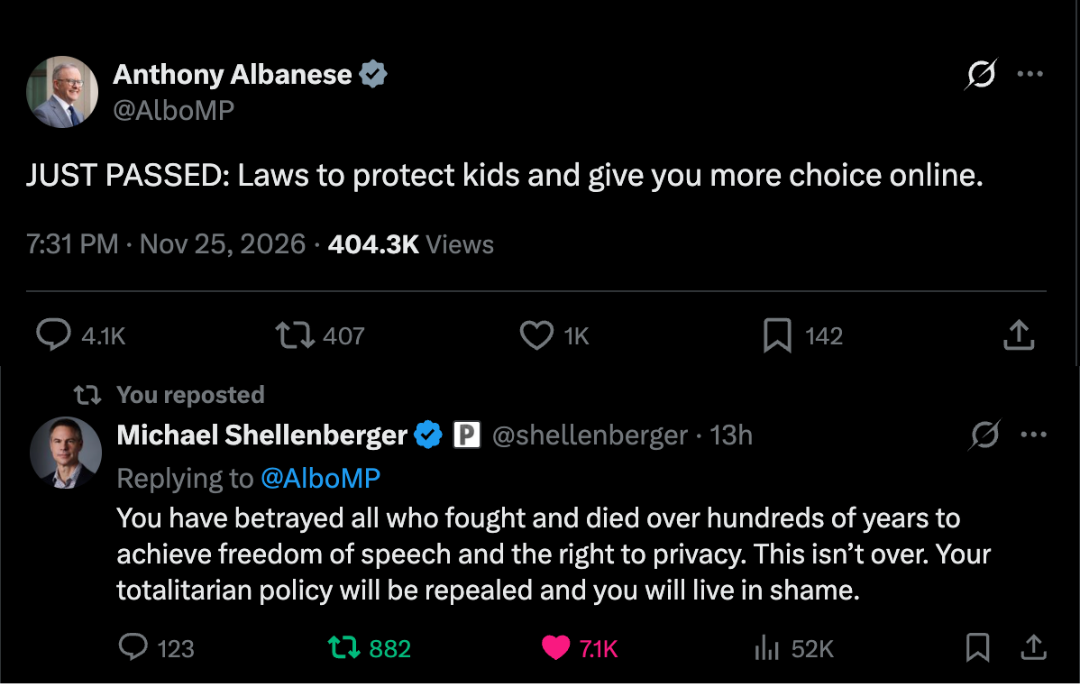
Australia's Parliament has officially passed its Digital Duty of Care Bill.
When we started PILLAR in September 2025, one of the main reasons we formed was the proposed under-16 social media ban.
We knew then that the implications would extend far beyond children and social media. We warned that it could be the beginning of a much broader expansion of government control over the internet.
Today, we're seeing those concerns materialise across the Tasman.

What started with protecting children has become something much bigger.
Australia's new legislation extends regulatory obligations beyond social media to online games, apps and artificial intelligence services.
It expands the powers of the online safety regulator and places obligations on technology companies to proactively address online harms, with potentially billions of dollars in penalties for non-compliance.
Our concern is that:
Vaguely defined concepts of harm could capture legitimate opinions and lawful expression.
Enormous financial penalties could incentivise platforms to censor content rather than defend freedom of speech.
Expanded regulatory powers could give governments greater influence over what people see, say and share online.
Compliance requirements could come at the expense of individual privacy and online anonymity.
Protecting children is a legitimate and important responsibility. But we do not believe it requires sacrificing the fundamental freedoms of an entire population.
New Zealand is not immune.
Regardless of the outcome of tomorrow's special votes, we remain deeply concerned about the direction of digital regulation in New Zealand.
The under-16 social media ban, online safety regulation, digital identity verification and the potential establishment of an online regulator cannot simply be considered in isolation.
Taken together, we believe these measures risk creating a regulatory framework through which the state could exercise unprecedented influence over our digital lives.
Who we are. What we say. What we read. What information we can access.
These are precisely the kinds of threats PILLAR was established to address.
We do more than campaign. We build alternatives.
While governments have millions of taxpayer dollars to develop legislation, our small team has been working to produce credible legislative alternatives that protect the fundamental rights and freedoms of New Zealanders.
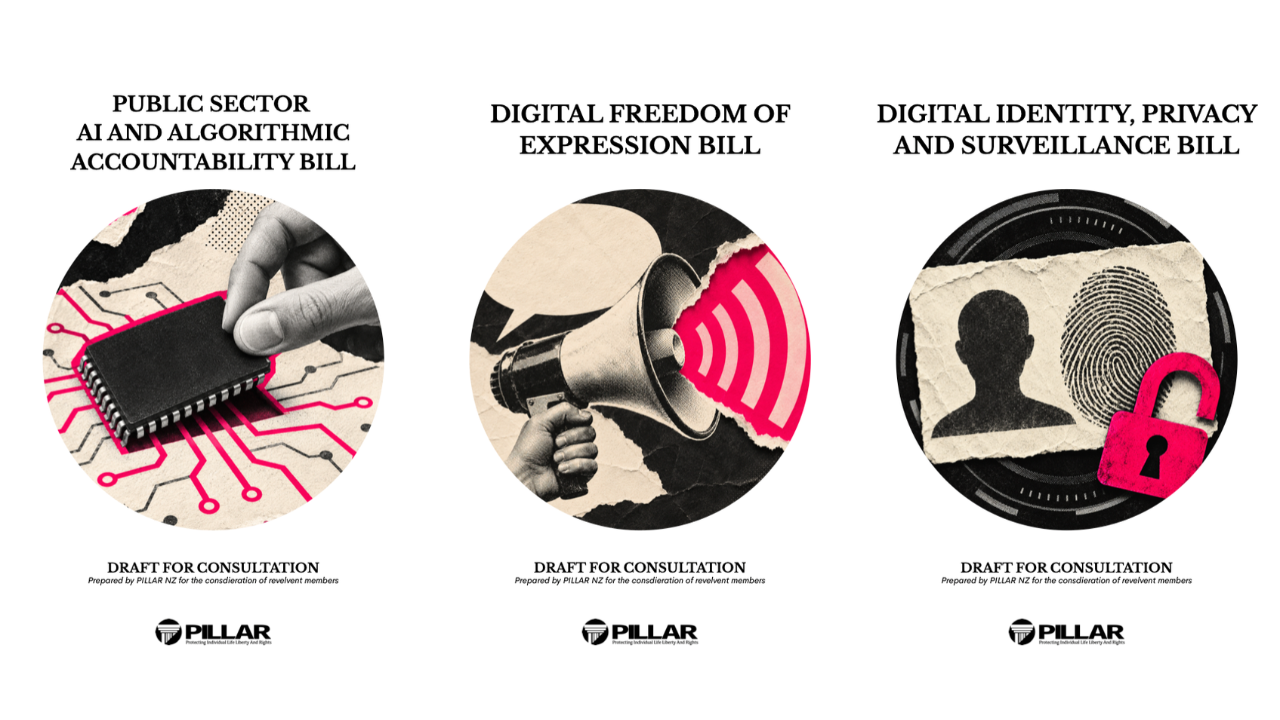
Today, we're announcing three new pieces of proposed legislation to accompany our Digital Bill of Rights:
Digital Freedom of Expression Bill
Digital Identity, Privacy and Surveillance Bill
Public Sector AI and Algorithmic Accountability Bill
All four are now available on our website, and I'd encourage you to take a look.
We believe New Zealand can address genuine online harms, protect children and embrace technological innovation without compromising individual freedom.
Thank you for your continued support, your belief in our mission and your generosity.
We'll keep fighting the good fight, and we hope you'll stand with us.
We stand firm so every New Zealander can stand free.