Proposals to expand Euthanasia kill choice and freedom
This week ACT re-emphasised that is hopes to make it easier for individuals to end their life through Euthanasia.
The proposal to further expand the reach of euthanasia legislation under the guise of ‘freedom’ and ‘choice’ is an ugly distortion of both ‘choice’ and ‘freedom’. Death is not the same as any old consumer product that individuals should have free access to choose from - we are not choosing between ice cream flavours at the store.
PILLAR was founded on the idea that every individual’s life is valuable; that every individual is imbued with an inherent dignity worth protecting. Proposals that seek to remove the current restrictions on Euthanasia go directly in the face of such as aspirations...pursuing death, not life.
A society that fails to celebrate and cherish life to fullest will not exist for long.
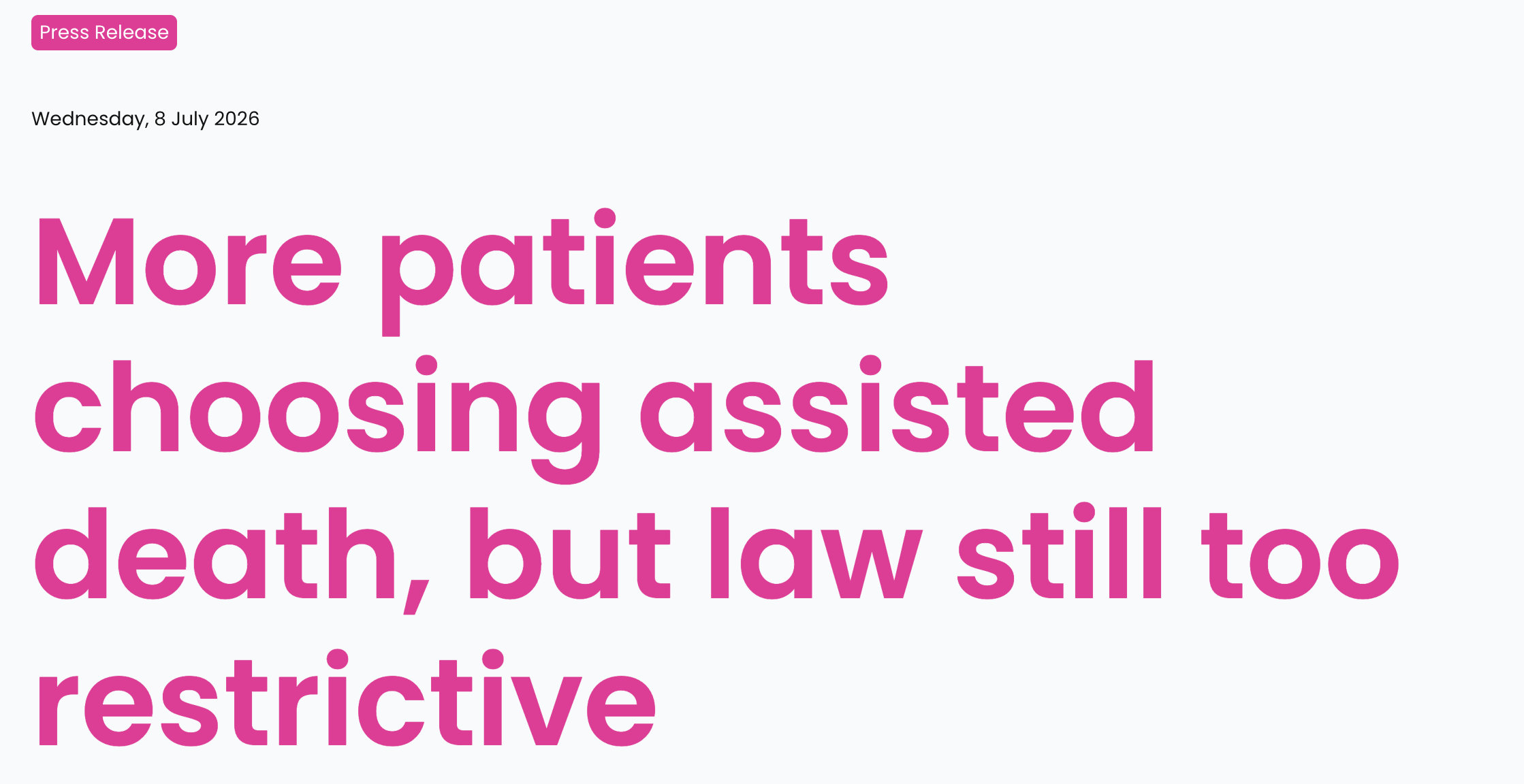
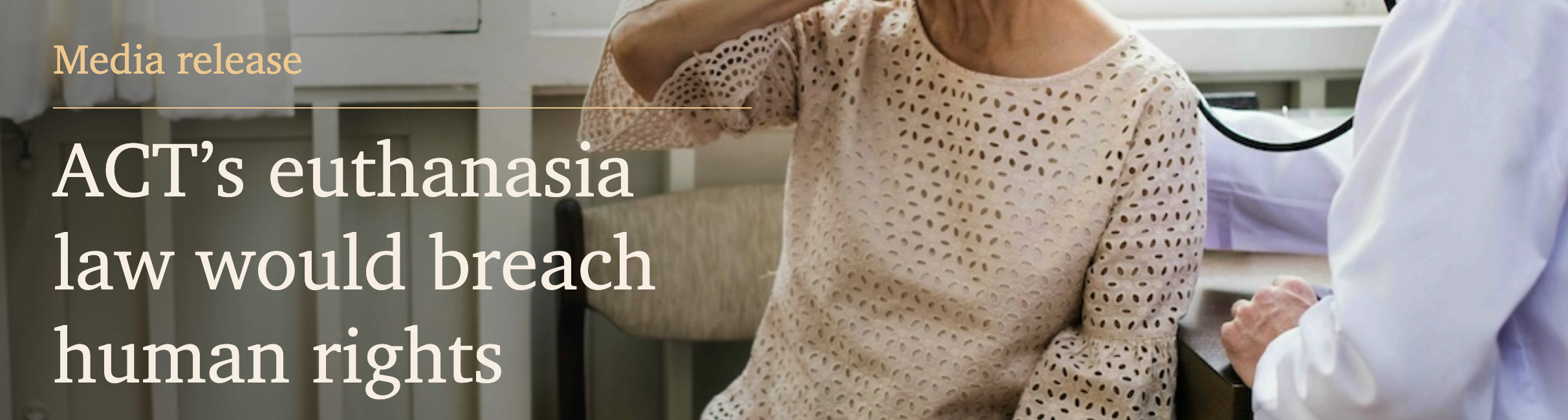
The party heralds these moves as “one of the most significant human rights reforms in New Zealand's recent history”.
No so fast! Policy outcomes that one party desires should not be dressed in the language of ‘rights’.
Human Rights are about preserving and protecting the life of every individual – if we lose the north star of ‘life’ then human rights become meaningless, losing both its justifications and its limits.
ACT is proposing to remove some of the following restrictions:
“Removing the six-month prognosis.
Allowing patients to waive consent on the day if their request for assisted dying is approved but they lose the capacity to make decisions in the intervening period.
Remove the prohibition on doctors offering euthanasia to patients who have not requested it”
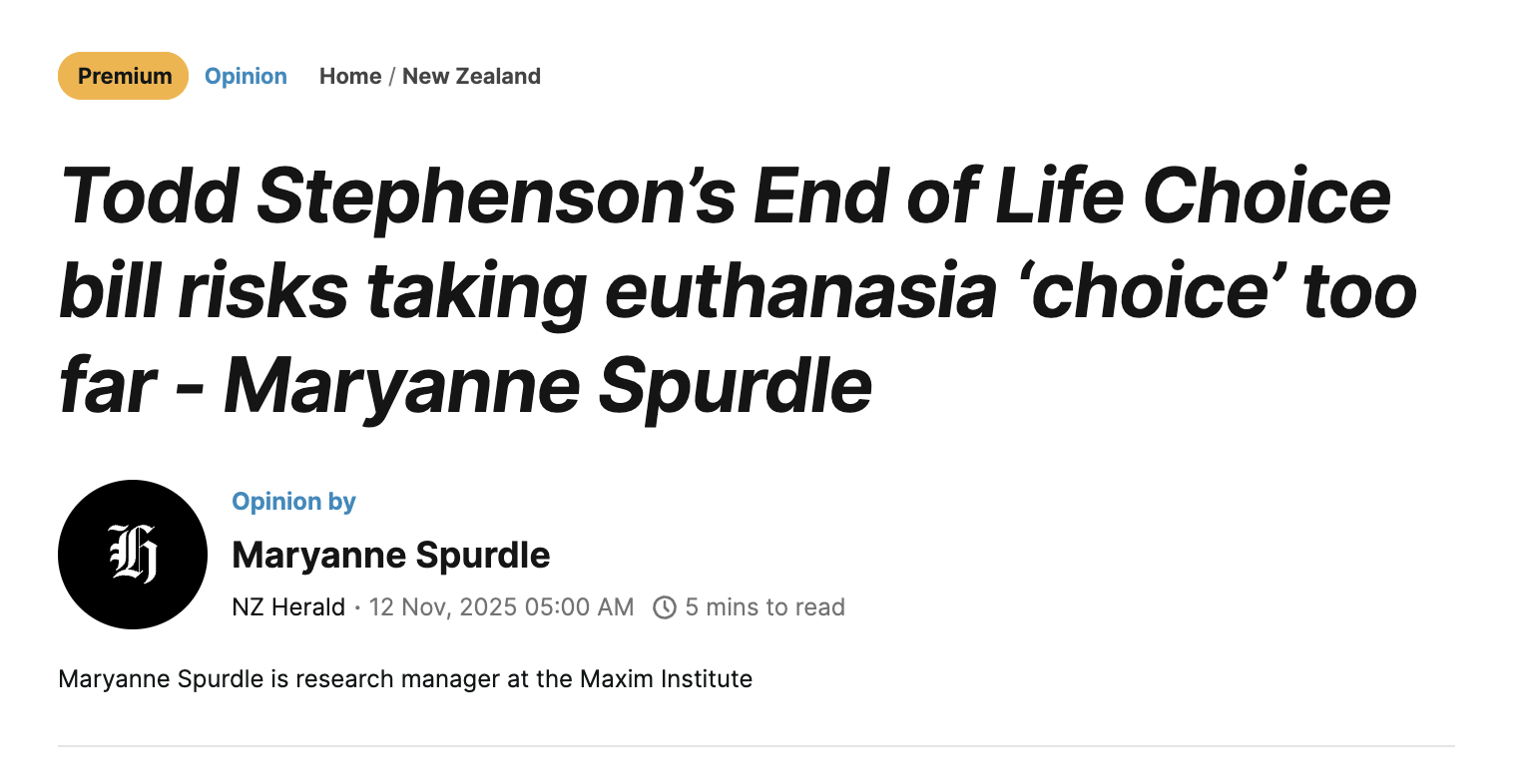
The Herald Op-ed above notes the experience of a Dutch patient.
“She had dementia and a directive to die at a later date, but on the day, she resisted her lethal injection. The physician had family members hold her down to finish the job. Does this look like “free choice”?"
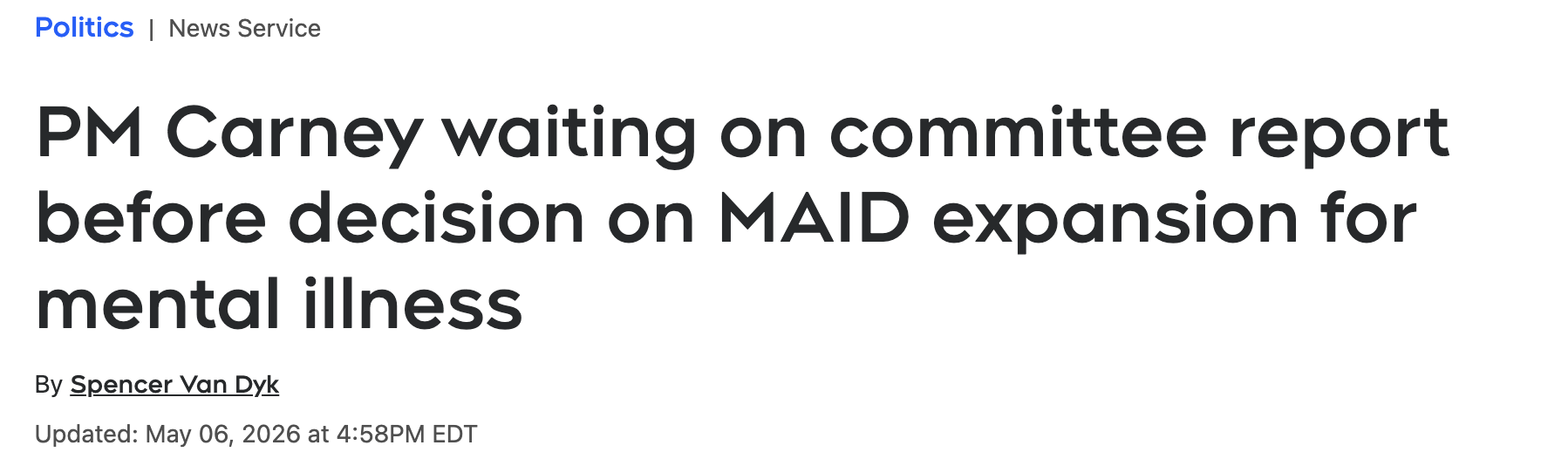
Many of these proposals look to explicitly copy Canada’s approach, where they had a parliamentary committee investigation on whether Euthanasia legislation should be expanded to allow those solely suffering from a mental illness to participate in the scheme.
Did they really need a parliamentary discussion to come to a conclusion on this?
A country where 5% of all deaths are currently attributable to Euthanasia, that’s one in every 20 deaths.
When discussing death, the chatter about ‘choice’ becomes blurry. An individual suffering and unwell can be deeply impacted by the slightest suggestion of euthanasia - they are far more sensitive to such implications. In these circumstances the line between choice and coercion is dangerously murky and we ought to tread lightly. It should not be forgotten that these proposals also work to undermine the great developments in the area of palliative care which is widely accessible today.
The measures mentioned above are dressed up in the language of choice but will only work to suffocate it, both for vulnerable individuals and medical professionals whose conscience would not allow them to propose to such severe measures, unwilling to promote or suggest it to their patients. As one commentator put it, “it’s ironic that a law about end of life choice would limit freedom of choice”.
PILLAR has stood against various measures that threaten liberty and life in the past ten month. As these discussions materialise into policy leading up to the election, PILLAR will once again stand for life and liberty.
When we lose sight of the very life we once hoped to protect, our strivings will only work to destroy life.
Expanding the reach of Euthanasia will simply undermine the very life that Human Rights Law was established to preserve.