Academia Quietly Under Threat in NZ
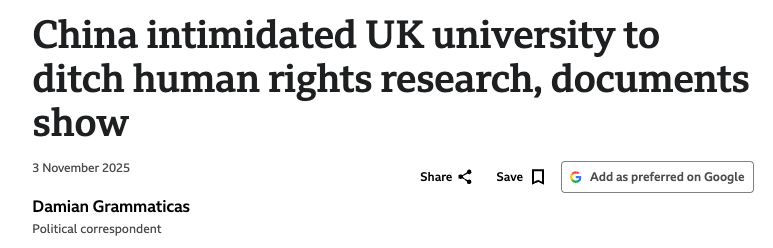
In November 2025, BBC News reported on campaign of harassment and intimidation taking place at Sheffield Hallam University to shut down an academic's research into allegations of forced labour among Uyghur Muslims in China.
The academic whose work was attempted to be suppressed noted that her University had, "negotiated directly with a foreign intelligence service to trade my academic freedom for access to the Chinese student market".
Another example emerged this year, when the Chinese Embassy in Argentina reportedly pressured the University of Belgrano to cancel a book presentation critical of the Chinese government.
…
Friend, PILLAR was established to protect freedom in New Zealand - so why do I tell you these international stories?
These stories point to a bigger picture - a threat we are not immune from and are currently facing.
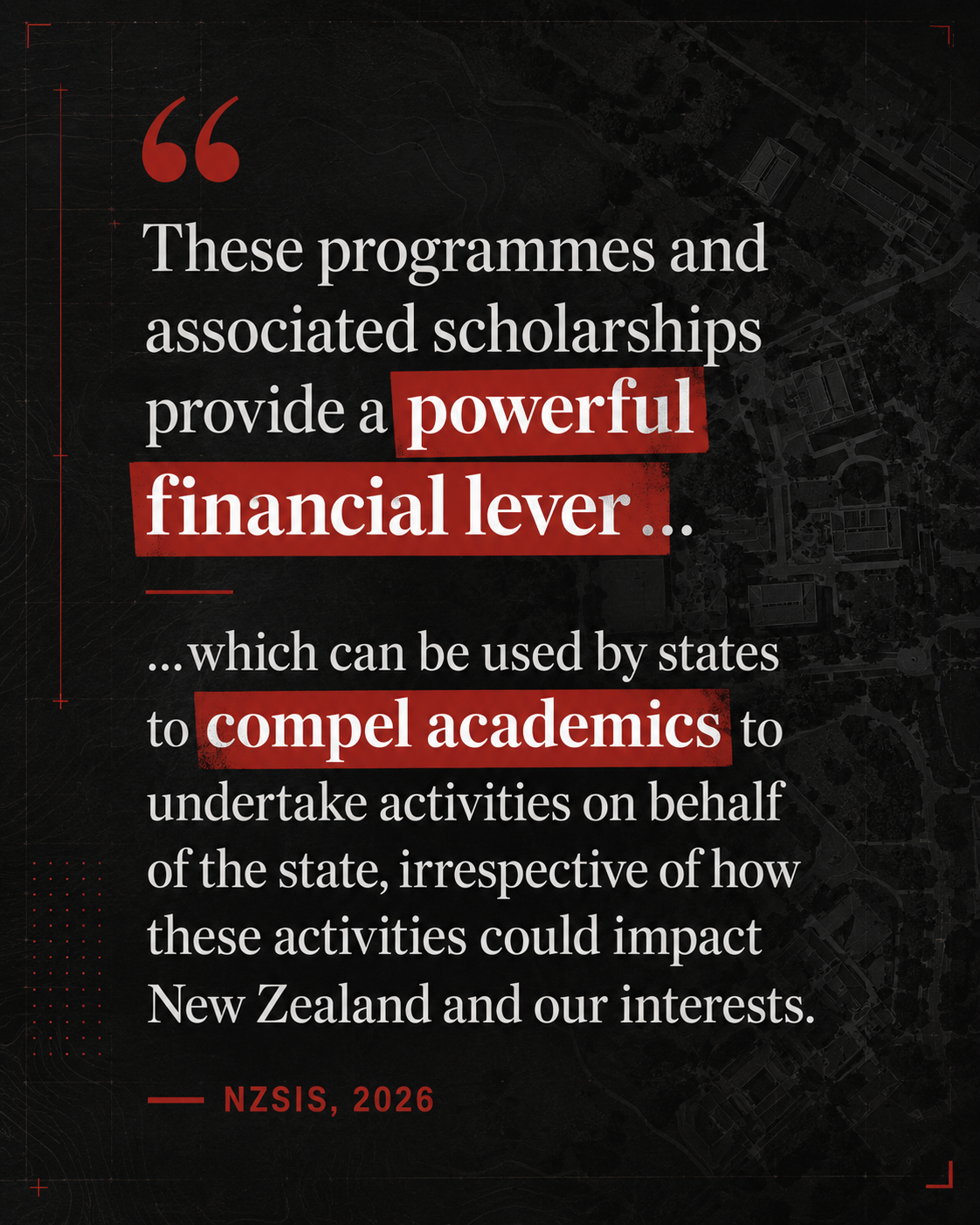
This past week, the NZSIS warned of a growing threat to New Zealand’s national security: foreign states targeting our universities as avenues for influence and infiltration.
The report warns that “certain programmes and associated scholarships provide a powerful financial lever,” enabling states to pressure academics into activities that may undermine New Zealand and our interests.
Our taxpayer-funded universities are powerful institutions that shape the future of this country. The thousands of young New Zealanders who pass through universities deserve institutions that are trustworthy, free from coercion, and uncompromising in their pursuit of knowledge and truth.
In light of recent reporting, we remain uncertain as to whether robust frameworks are in place to ensure our universities are protected from threats posed by adversarial foreign powers.
Rhetoric cannot replace vigilant and proactive measures that protect the sovereignty and liberty of our institutions.
Of particular concern is the presence of Confucius Institutes in New Zealand Universities.
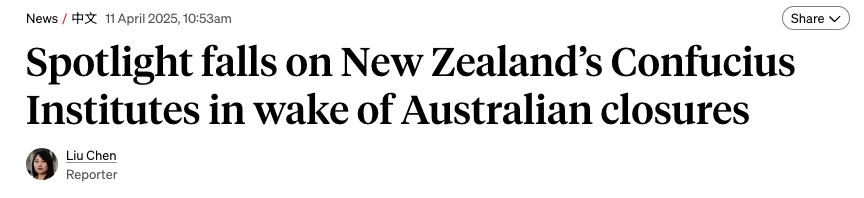
Last year, academics in New Zealand were calling for action on these institutes that act as arms of influence for the Chinese Communist Party and pose a threat to academic freedom.
An RNZ report notes a China expert saying:
…the centres should never have been allowed to operate in the university sector, "as their aims are diametrically opposite to the free and unfettered pursuit of knowledge and the role as critic and conscience commitments that underpin university work".
These calls gained traction after six Australian universities closed such entities.
It has been reported that to date, eleven countries - Australia, Belgium, Canada, Denmark, France, Germany, the Netherlands, Spain, Sweden, Switzerland and the United States have closed some or all of their Confucius Institutes.
But no action in New Zealand. Why?
We have written to the relevant Minister and MP.
The transformation of our society does not happen overnight – for good and for evil. It happens through slow and meticulous acts of influence.
If we fail to be vigilant, we will give ground to parties that wish to consume the agency of our institutions, culture, and eventually freedoms at large.
We are actively building a campaign to bring this issue back into the public spotlight and demand action.
When academic freedom, institutional independence, and national sovereignty are at stake, timidity is not an option.