Banning smart-phones for U16s?!
“Throw things at the wall and see what sticks” seems to be the guiding philosophy behind policy proposals aimed at addressing the poorly defined harms of social media.
This week we heard a proposal to ban smart-phones for under 16s!
There are so many questions to ask about this policy, not least of which:
How do you enforce it?
What would be the legal penalties for parents who ‘break the law’?
Do parents do not have the right to decide whether their child has a phone?
Amidst this, I am reminded of an idiom that says, “to the man who only has a hammer, everything he encounters begins to look like a nail.”
This is exactly what many politicians suffer from. When ‘the law’ is your only tool for fixing problems you will no doubt write legislation for every ailment.
A hammer will never fix a broken window. The social media harms discussion is a perfect example of this reality.
Or think of it another way. With the FIFA World Cup final only two sleeps away, consider the behaviour of goalkeepers facing penalty kicks.
Research shows that goalkeepers are more likely to make a save if they simply stand their ground rather than dive. Yet, in the majority of cases, they dive anyway. Why?
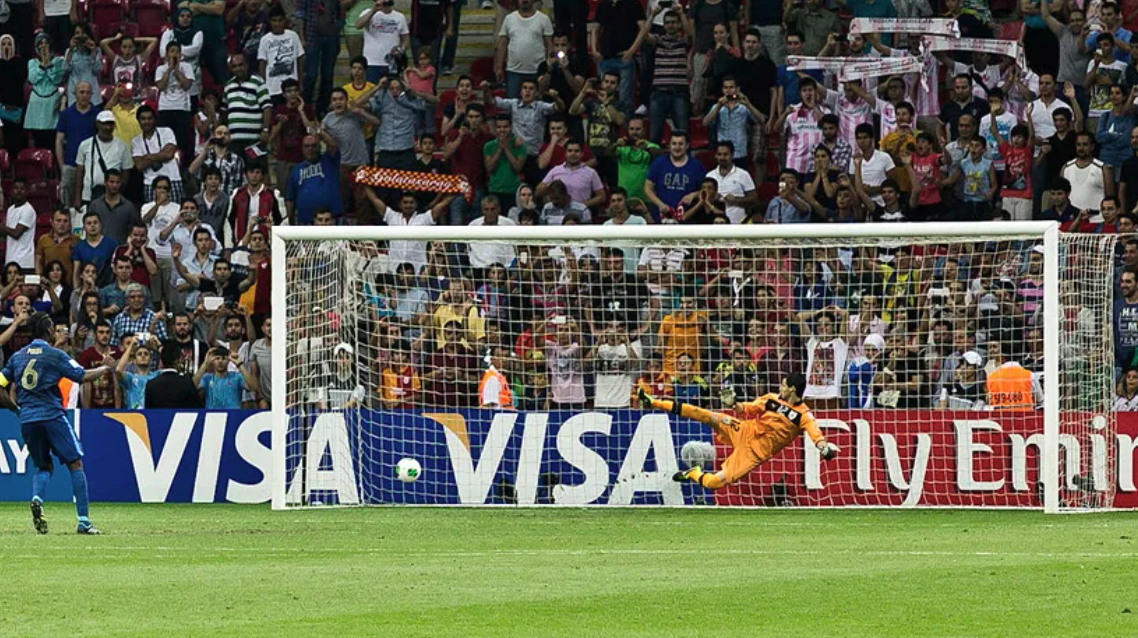
Because, like our vote-hungry politicians, they fall victim to action bias—the instinctive belief that doing something is better than doing nothing, even when the evidence suggests otherwise.
As public debate grows increasingly hysterical about the alleged harms of social media to young minds, politicians will inevitably throw proposals into the ether to demonstrate concern, often with little thought for their long-term consequences.
It is the political equivalent of a sugar hit: immediate attention, a polling boost, and the appearance of action—followed by consequences that someone else will have to deal with.
The current solutions to this mammoth and seemingly existential threat are so simple it feels too good to be true:
Don’t give your kids smart phones
Create strong clear boundaries in the home around phone use
Educate young people about the digital world
Educate parents and caregivers about the online world
Remove and block truly illegal content
If we give up on these basics, we’ll pursue ambitious projects that will inevitably cause more harm than good.
However - and you may not like to hear me say this- I suspect our politicians are simply responding to electoral incentives.
They do what wins votes. Simple.
Yes, part of the problem lies with the politicians who dream up these policy proposals. But part of the problem also lies with us. If politicians are responding to what voters reward, then we, as citizens, must accept some responsibility for the incentives we create.
If we, as a society, are unwilling to take responsibility for our own homes, families, and spheres of influence, we will inevitably look to the state to step in and clean up the mess left by our neglect.
And politicians will be more than willing to step in—especially if doing so earns them votes!
Yes, our politicians ought to do better and lead with principle. That is a reasonable expectation, and one we should continue to hold. Buf at the same time, we must not lose sight of our own personal responsibility, for it is our strongest safeguard against an ever-expanding State.
The politicians will continue to devise ever more extravagant policies and legal tools. But remember: when all you have is a hammer, every problem looks like a nail.
Not every problem can be solved by legislation.
In such circumstances, individual responsibility is the answer.