Cyber Threats mounting for NZ
Two new reports show North Korea and China are actively targeting New Zealand’s cybersecurity landscape.
The National Cyber Security Centre (NCSC) has released its 2026 Cyber Threat Report.
Like the NZSIS Threat Environment Report, this report paints a sobering picture:
Foreign adversaries are persistently threatening New Zealand organisations and businesses.

In today’s digital age, threats to our national sovereignty, democracy, and freedoms take on digital forms.
We must fortify our democracy.
Our capacity to sustain a liberal and democratic society depends on a conception of national security that extends beyond our traditional understanding of borders, territory, and physical infrastructure and into the digital realm.
Insecure digital environments will limit our capacity to build a flourishing, free, and democratic society.
New Zealand can no longer rely on its physical distance and Pacific isolation as a form of defence and security – this mindset does not apply in the digital realm!
NCSC notes that:
In New Zealand the primary focus of state activity has been espionage, but internationally our partners have identified state actors using cyber tools to undertake intimidation, intellectual property theft, the disruption of networks and critical services, and in some cases, sabotage.
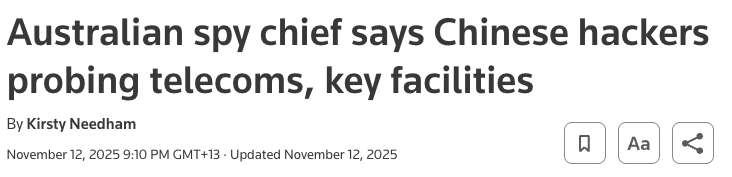
A country that cannot adequately protect the digital systems upon which its government, economy and citizens depend have its ability to exercise sovereignty seriously constrained.
NCSC notes that cyber threats come from China, Russia, Iran and North Korea. They say,
“China is the most persistent and capable stateactor undertaking cyber activity in New Zealand.”
At the same time another report notes that North Korean IT workers are attempting and being successful in finding employment in New Zealand to earn money and intelligence for the North Korean government.
Our democratic institutions, critical infrastructure, economy, communications and access to information increasingly depend on digital systems.

When those systems are vulnerable to foreign interference, espionage, disruption or coercion, the consequences are not confined to cyberspace but to our entire way of modern life.
Theses digital systems affect the security, sovereignty and democratic resilience of New Zealand.
The threats recognised by this report fall at the nexus of the issues PILLAR has been confronting for the past year.
Our persistent campaigning and lobbying for strengthened measures against Foreign Interference in New Zealand, including for the adoption of our Foreign Influence Transparency Bill is just one example.
Our firm opposition to the under-16 social media ban is partly driven by serious concerns about the mass collection and storage of New Zealanders’ personal and biometric data.
With mounting reports of infiltrated digital systems, these concerns are no longer trivial.
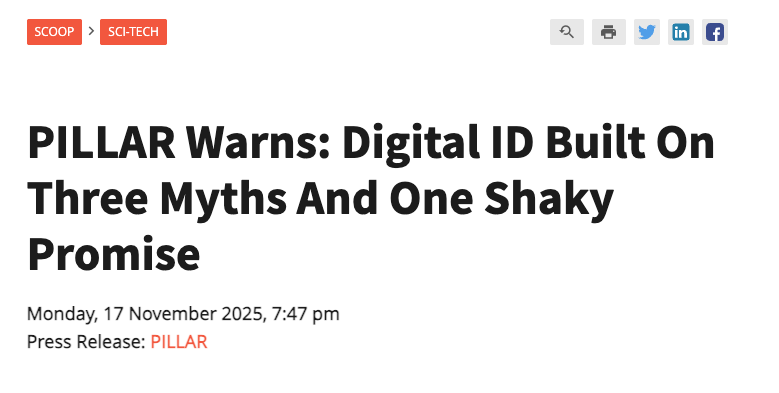
PILLAR’s long-standing caution about mass uptake of Digital IDinfrastructure by government agencies is yet another example.
When cyber threats are mounting, the collation of personal data will only create treasure troves for adversaries who wish to infiltrate our systems and cripple our society.
Regardless of where the chips fall after election day this November, PILLAR’s firm and principled advocacy will remain focused on protecting a free, sovereign and secure New Zealand where individuals can live and flourish.
Thank you for standing with us.