Don’t let NZ double down on Australia’s failing Social Media policies
Australia's social media ban is failing. Don't let New Zealand double down.
When politicians first proposed banning under-16s from social media, we were told Australia was leading the world.
Today, the evidence tells a very different story.
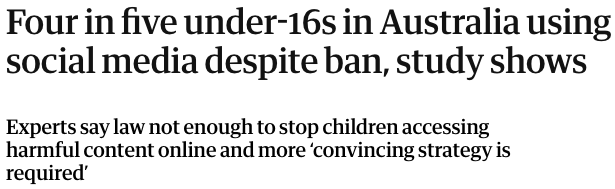
A new Australian study has found there’s “insufficient evidence" that the ban has had any meaningful impact on young people's social media use.
The numbers speak for themselves.
• Around 85% of under-16s are still using social media.
• More than half are still using their own accounts.
• Others have simply created fake accounts or found ways around the restrictions.
• Overall use has barely changed.
The policy has failed to achieve its primary objective. That’s exactly what PILLAR warned would happen. And its only part one of the warning.
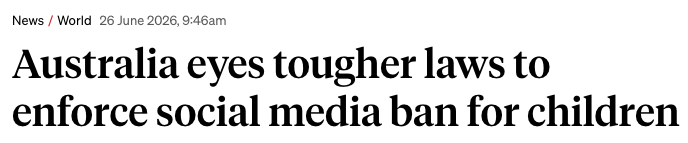
Now, faced with evidence that the ban isn't working, Australian politicians aren't asking whether the policy itself was flawed. They're asking how to make it stronger. That should concern every Kiwi.
Failed government policies rarely result in governments admitting they got it wrong. More often, they conclude they simply didn't have enough power to enforce them.
Today it's calls for stronger age verification. Tomorrow it will be tougher identity checks. Then biometric verification. Then Digital ID. Then government-approved credentials to access parts of the internet.
Every new enforcement mechanism means more information collected, more surveillance, more opportunities for privacy breaches, and less freedom for ordinary citizens who have done nothing wrong.
This is how government power grows. Not all at once, but one "reasonable" enforcement measure at a time.
The question isn't simply whether social media can be harmful to children. Of course it can.
The real question is this: How much freedom are we prepared to surrender in pursuit of a policy that Australia is already showing doesn't work?
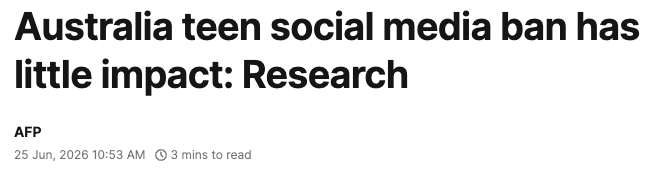
If four out of five children are still using social media despite the ban, why would New Zealand copy Australia's approach?
Blanket bans risk doing more harm than good. They create false confidence for parents while pushing governments toward increasingly intrusive systems of age verification and identity checks.
Children deserve protection online. Parents deserve support. But neither requires handing governments sweeping new powers over how every New Zealander accesses the internet.
At PILLAR, we've consistently argued for solutions that actually address the problem while respecting freedom and privacy.
That means equipping parents with better tools and information. Teaching digital resilience and online safety in schools. Targeting genuinely illegal content and those who exploit children. Enforcing existing laws against predators and criminals. And rejecting blanket restrictions that punish everyone while achieving very little.
Protecting children and protecting freedom are not competing goals. In fact, the strongest protection children have has always been engaged parents, strong families, good education, and targeted law enforcement, not broad government control. Australia has now become the world's first real test case.
The evidence is in. The ban isn't working.
New Zealand has a choice. We can learn from Australia's mistakes, or we can repeat them and inevitably be told that the answer is even more government power, even less privacy, and even fewer freedoms.
At PILLAR, we believe New Zealand should choose a different path.
Thank you for standing with us as we defend parental rights, privacy, freedom, and evidence-based public policy.