Protecting Children? Or Driving Them Into Harm’s Way
Friend, in four days, Australia’s ban on social media for under-16s kicks in. The only thing supporters of the ban seem to love more than a Country Road spend and save sale is keeping everyone “safe online”, even when no one asked for their help.
But what happens when, instead of submitting to the ban, sacrificing private data, handing over identity documents, and kissing the eSafety Commissioner’s ring, young people simply move somewhere else?
Well that’s exactly what’s happening. Australian teens have migrated en masse to new platforms. Counterstar, Lemon8, and Yope have seen a tidal wave of new users. Yope went from 318th on the App Store to number one in a week. A week.
The government’s response? Add more platforms to the naughty list. Expand the blacklist. Chase children around the internet like a digital neighbourhood watch on a power trip.
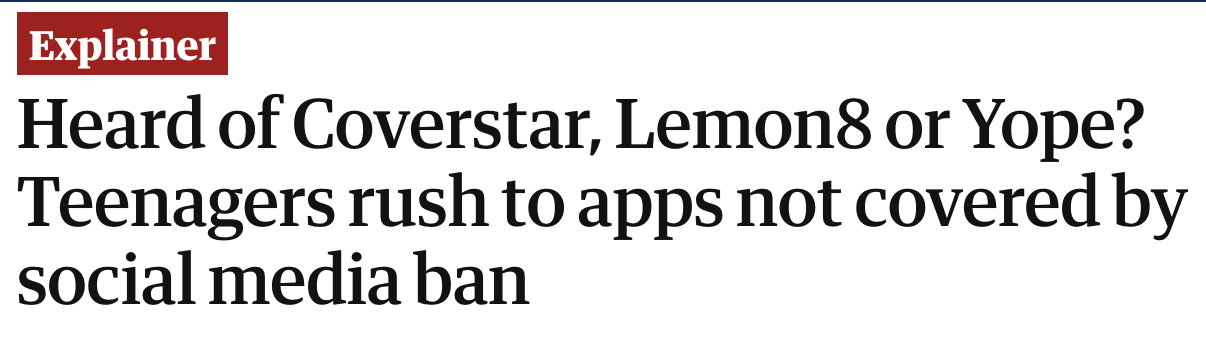
With both the Aussie and proposed New Zealand ban there is a huge component missing. A clear and definitive definition of what counts as social media. Without a definition, the government can redraw the boundaries whenever it likes. Officials call this a “dynamic approach”. Experts call it whack-a-mole. Meanwhile children get pushed into darker, lesser known corners of the web, while the state congratulates itself for “keeping them safe”.
Let’s be honest. These bans stand to only do one thing well, and it isn’t protecting children. It’s collecting data. Realize, to identify anyone under 16, everyone using a platform will soon be required to prove their age. Some experts pretend this isn’t true, claiming platforms already know who is underage. Yet those same experts admit that if your account is misidentified, you will have to upload your ID to fix it.
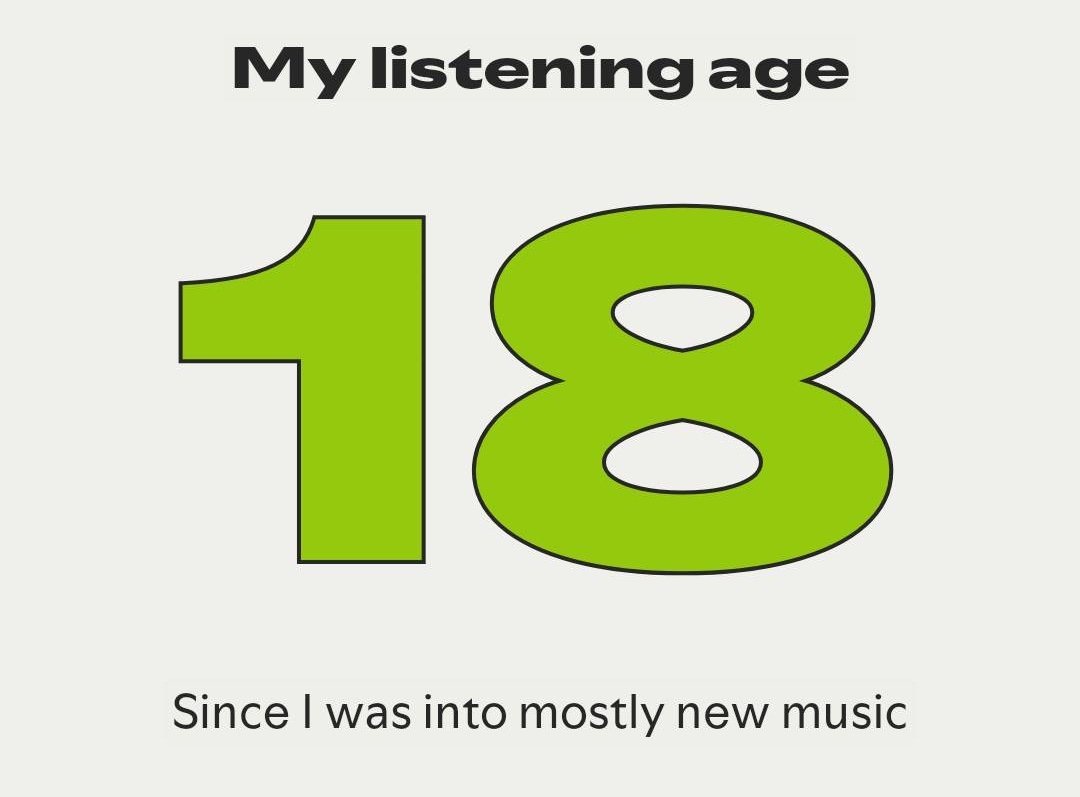
For context, my online activity clearly belongs to a 30-year-old man, yet my Spotify Wrapped apparently thinks I’m 18. Good luck building national policy on that level of accuracy.
Meanwhile, the platforms everyone loves to hate have spent billions creating moderation systems, safety features, filters, and parental controls. The tools already exist. The problem is that parents often don’t know about them or activate them. This is a challenge solved with education, not government interference. It is not the state’s role to intrude on the parent-child relationship.
YouTube has confirmed that banning under-16s will lead to mass deletion of accounts, but that kids will still use the site without logging in. That means no parental controls, no filters, and no safeguards. The ban doesn’t protect them. It removes the very tools that do.
Something else I found interesting is the absence of one platform from the banned list: Bluesky.
After Elon Musk bought X, thousands of left-wing users fled to Bluesky. It marketed itself as a safe space for vulnerable people and a digital safe speech for thoughtful discussion. Yet it also hosted thousands of posts celebrating the murder of conservative commentator Charlie Kirk. Songs, memes, and appreciation posts for his killer piled up. All while Bluesky avoided bans in the EU and now Australia.
Friend, New Zealand is gearing up to follow the same doomed path. Thanks to a campaign driven by fear and fury, that has a direct line to the Prime Minister. This isn’t a grassroots uprising. It is an elite vanity project, funded like no tomorrow, with little regard for the collateral damage and even less regard for everyday New Zealanders who don’t have the PM’s number on speed dial to tell him off.
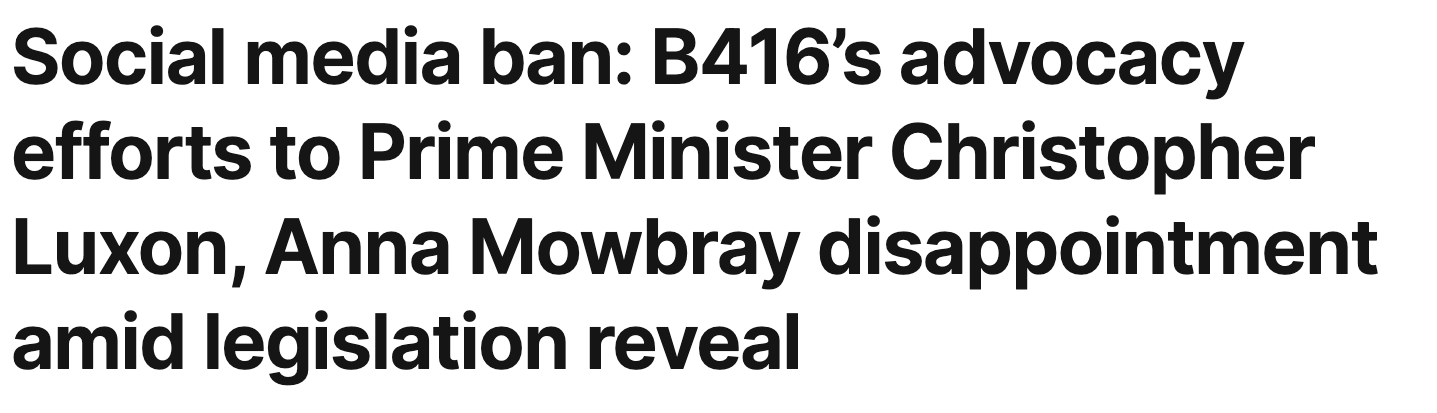
The ban is being railroaded at a rapid pace by ministers Catherine Wedd and Erica Stanford, who have surrounded themselves with a chorus of boss-girls and cool-mums, drowning out the voices of opposing parents, academics, privacy experts, and regular Kiwis who have genuine concerns.
The question isn’t whether we protect children. It’s how. And pushing them into digital alleyways while harvesting everyone’s IDs is not protection.
So what can you do? Sign our petition if you haven’t already. Share this email and information with the people around you.