THE END OF ONLINE FREEDOM
In July 2025, I had a conversation with a prominent political commentator and civil liberties advocate who told me it wasn’t wise, or worthwhile, to oppose the Government’s proposed U-16 social media ban.
Why? Because “social media is bad for kids” and “we can’t do nothing.” That was the argument. No thought given to how a ban would actually work. No concern about the machinery required to enforce it. No concern about scope creep. No concern about expanding state power deeper into the digital lives of ordinary people.
That disagreement was the spark that set PILLAR in motion.
Two months later, in September, we launched with our very first campaign and submission opposing the social media ban. Since then, that same person has changed their mind and I hope they won’t be the last. Because from day one, we said this bill was a Trojan horse. And we were right.
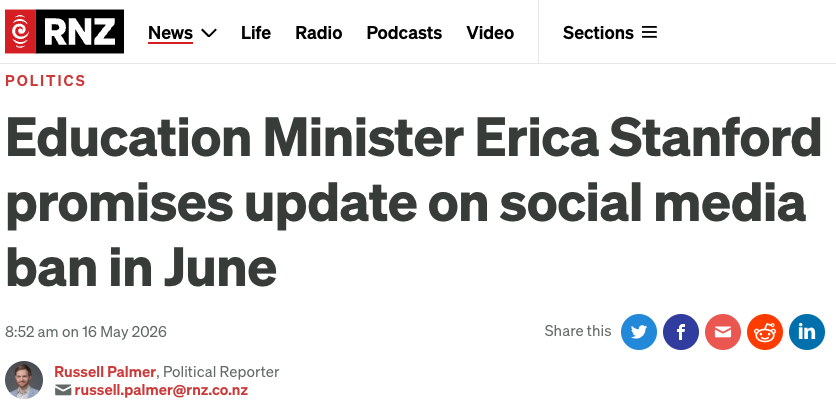
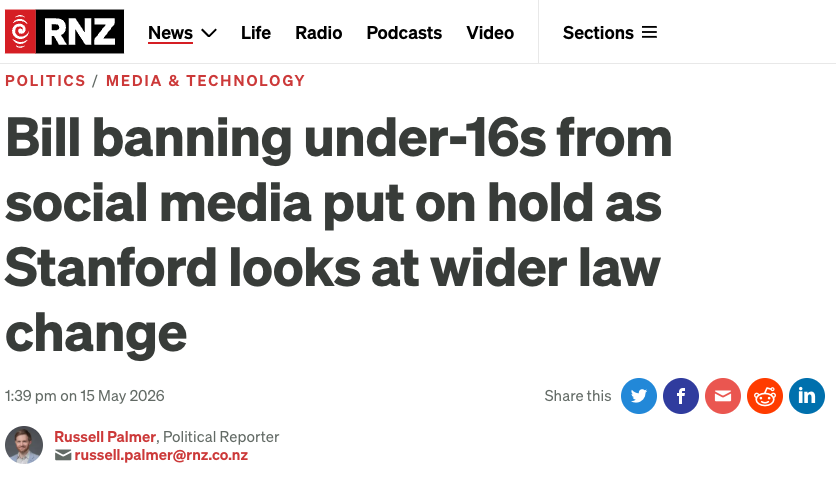
Nationals Erica Stanford last week announced that they’re sidelining the social media ban for U-16s in order to focus on a much broader and invasive internet regulatory framework.
Their campaign was never just about kids on social media. It was about preparing the public for mass online identification and control. A Trojan horse. Start with children. Talk vaguely about “harm.” Never properly define it. Create a moral panic big enough that questioning the solution becomes socially frowned upon. Label critics toxic, irresponsible, or predatory.
Trap the debate around whether a problem exists instead of whether the proposed solution is ineffective, potentially dangerous or even authoritarian.
Because yes, there are genuine issues online. But “there’s a problem” isn’t an argument for giving governments sweeping new powers over the internet. Ironically, the people campaigning for the ban did more to help kids by raising awareness than the ban itself ever would. Education, parental involvement, digital literacy, and targeted enforcement are the real answers. Not mass surveillance infrastructure.
Now we’re staring down the barrel of an internet-wide regulatory framework and unelected enforcement bodies pushing universal age verification. Let’s call that what it really is: Digital ID for the internet. If you want to use social media, websites, forums, or online services, you’ll increasingly be expected to prove who you are and how old you are before you can participate. New Zealand’s digital bouncer.
And when people inevitably bypass restrictions by moving platforms or using VPNs, what happens next? More control.
This is how governments think. Social media ban not working? Introduce universal age verification. Age verification not working? Ban VPNs. VPN bans not working? Restrict devices. Still not working? Restrict internet access itself. And if all else fails? Criminalise dissent.
China, Russia, Iran, and North Korea are obvious examples of internet control. But let’s stop pretending the West is immune to the same impulses. The UK, EU, Canada, and Australia are rapidly expanding online censorship, surveillance, and identity requirements too.
But the fight is far from over. At PILLAR, we’re going to keep rallying Kiwis against this growing push for online control, surveillance, and digital permission systems. Because free societies don’t require citizens to identify themselves just to speak, read, watch, or participate online. And once that principle is lost, getting it back will be nearly impossible. You can read more about the campaign against state overreach and digital security on our website.
It’s not too late to stop this rubbish, but it will take us all saying no! You can start today by sharing this with a friend, family member or neighbour.
Furthermore you can support our work here at PILLAR and we will continue to fight for you, because you deserve better than a government hell bent on controlling the internet, your speech, your children, and your private life.