Traditional media is losing audiences, revenue and public trust. Increasingly, its answer isn't to win people back. It's to get the government involved.
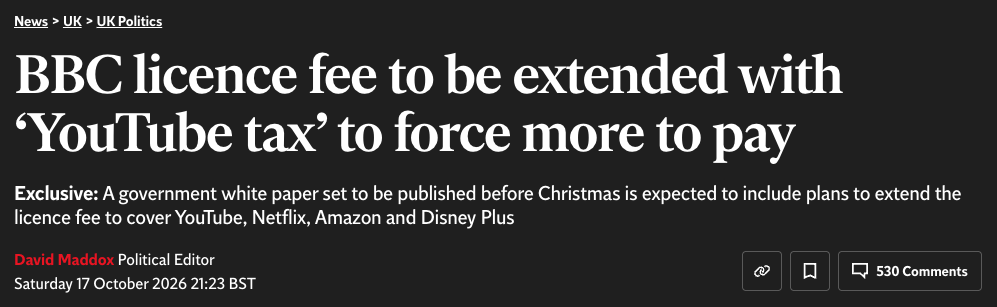
In Britain, proposals to expand BBC funding have been linked to combating misinformation. In New Zealand, Labour wants to modernise the Broadcasting Standards Authority (BSA) for online audiences and revive legislation compelling technology companies to negotiate payments with news publishers.
Different proposals. Same question.
Are we protecting journalism in the public interest, or protecting established institutions from a public increasingly choosing alternatives?
For decades, a handful of institutions controlled our information landscape. They selected the headlines, experts and voices deemed worthy of attention.
Then came the internet.
Independent journalism, podcasts, social media and streaming threw open the gates. Ordinary people could challenge powerful institutions and build audiences without anyone's permission.
The gatekeepers aren't happy.
Of course, misinformation exists. But misinformation isn't simply disagreement, and unpopular opinions aren't necessarily untrue.
When governments begin treating contested political ideas as problems to be managed rather than arguments to be challenged, freedom of expression is threatened.
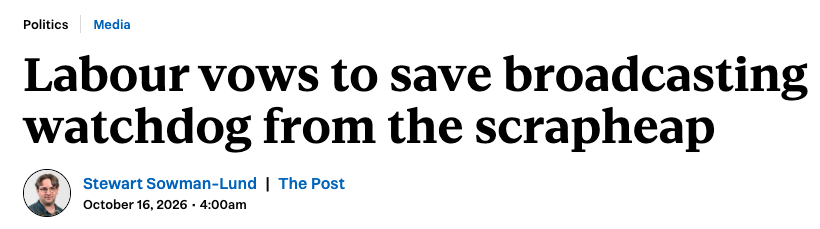
Labour's proposed BSA overhaul raises serious questions. Which platforms would be regulated? Would independent journalists and podcasters be captured? Who decides when controversial opinions cross the line?
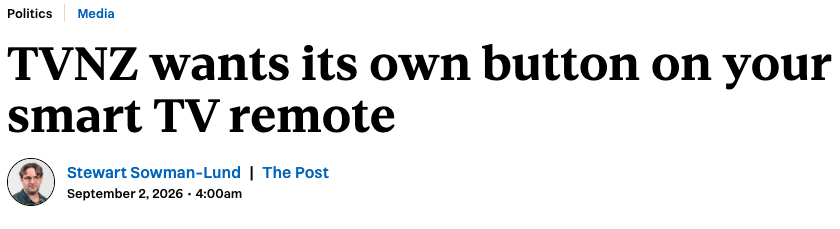
Meanwhile, Labour and National have supported measures favouring established local broadcasters on smart televisions.
Why should government decide which media platforms consumers see?
Let broadcasters earn their audiences.
Fair compensation for journalism matters. But protecting intellectual property must not become an excuse to protect established publishers from competition.
And perhaps mainstream media hasn't simply lost audiences because people stopped caring about news.
Perhaps people stopped trusting the news because too often it failed to reflect the reality they were living.
When lived experience and institutional narratives collide, trust fractures. Dismissing critics with labels only deepens that divide.
Independent media isn't automatically better. Popularity doesn't guarantee truth. But neither does a broadcasting licence, government funding or newsroom accreditation.
Credibility cannot be legislated. Trust cannot be taxed into existence. Relevance cannot be regulated back into declining institutions.
We absolutely need a functioning fourth estate. Courageous journalism exposes corruption, challenges authority and holds power accountable.
But the fourth estate is a function, not a collection of institutions entitled to permanent protection.
My challenge to politicians, regulators and broadcasters is simple.
Let the people decide.
Let competing voices challenge one another. Fund debates, public forums and genuine discussion, not systems that presume citizens cannot think independently.
A thriving democracy requires people capable of questioning, disagreeing and discerning truth, not captive audiences dependent on approved institutions.
The old media landscape isn't coming back. Nor should it.
Less prescribed truth. More proven truth.
Information is power. Truth is power. And power belongs to the people.
It's time we trusted them with it.