THE NZ FIRST DILEMMA
What is populism & is it really that bad?
I hate hypocrisy. Even more when I catch it in myself.
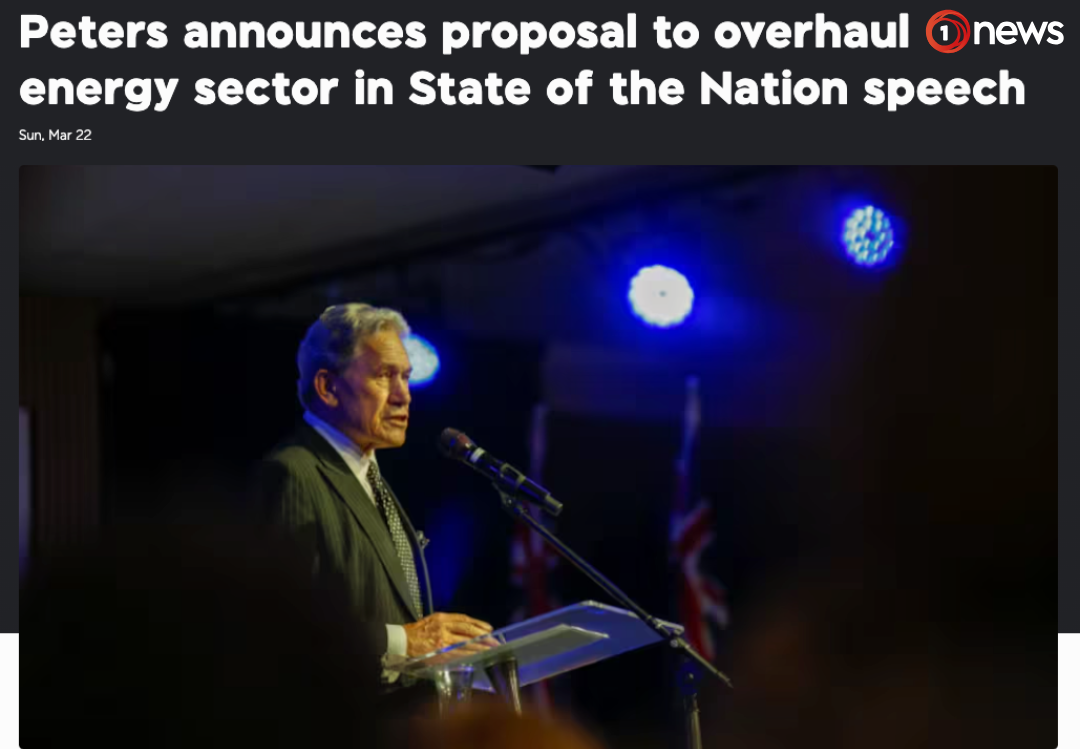
This week, I found myself defending, and almost advocating for, a political party during an interview: New Zealand First.
I didn’t say anything wrong. Nothing I regret. But afterwards I had to take a step back and ask myself a hard question. Why?
In my role at PILLAR, I pride myself on being politically neutral, non-partisan, and committed to the contest of ideas, not just the ideas from people I like.
A conversation with a trusted friend exposed something uncomfortable.
“How can you support that party? All they do is put forward headline-grabbing bills, only to quietly walk them back and replace them with something else.”
I couldn’t really argue. Not on principle. I just said I liked Winston. And that was the problem. It made me realise I hadn’t taken a principled stance. I’d drifted.
That got me thinking about a word we hear more and more: populism.
At its core, populism is about appealing to “the people” against “the elites.” That’s not inherently bad. In fact, it can be a necessary corrective when institutions lose touch.
But today, the word is often used as a slur. A label thrown at anyone gaining traction in the polls. And sometimes, it’s earned.
Because politics is, in part, a popularity contest. As Winston himself once said, “Who doesn’t want to be popular?”
But there’s a difference between genuine public support and manufactured popularity.
That’s not unique to one side of politics. Both sides are guilty.
On one side, we see “confusion” over basic realities. On the other, symbolic policies that generate headlines but solve little.
We often talk about politics as if division itself is the problem. Left vs right. Good vs evil. Woke vs conservative.
But a healthy society actually depends on disagreement. It depends on ideas being tested, challenged, and refined.
The real danger isn’t division. It’s when we stop thinking critically and start following personalities, parties, or slogans instead of principles.
Many of our political debates are, in truth, luxury debates.
But as the cost of living rises, as pressure increases on everyday families, and as freedoms are eroded through legislation, we need to refocus on what actually matters.
Policies. Outcomes. Trade-offs.
Not vibes. Not personalities. Not who delivers the best one-liner.

Thomas Sowell once said, “We’ve traded what works for what feels good.”
When I first heard that, I immediately thought of the political left.
But if I’m going to be honest, and I think we have to be, there’s a version of that same problem emerging on the right.
Maybe that’s just human nature. Which is exactly why we need to stay grounded in principle.
We need to look past the current politicking and examine track records. Look past personalities and evaluate policies.
That’s what we’re aiming to do at PILLAR. In the lead-up to the 2026 election, we’ll keep producing clear, non-partisan, liberty-centred analysis to help you think critically about the choices in front of you.
We’re also on a mission to help 10,000 young Kiwis enrol to vote for the first time.
This email won’t change the world.
It might not even change your mind.
But if it plants a seed, one that leads to deeper thinking, more principled thinking, and a more intentional vote, then it’s done its job.