Two truths and a lie.
Two truths and a lie. The strategy behind the push for a social media ban. And to be fair, it’s clever. Start with two things most people agree on.
Are there are “harms” online? Sure!
Should kids be left completely unsupervised online? No way.
Then slip in the lie…
That the government should step in and create a “safe internet”.
That’s the pivot. From concern to control.
Because once you accept that premise, everything else follows.
New powers. New regulators. New rules about what can be seen, said, shared — given you can actually get on social media platforms once age and identity verification come into play.
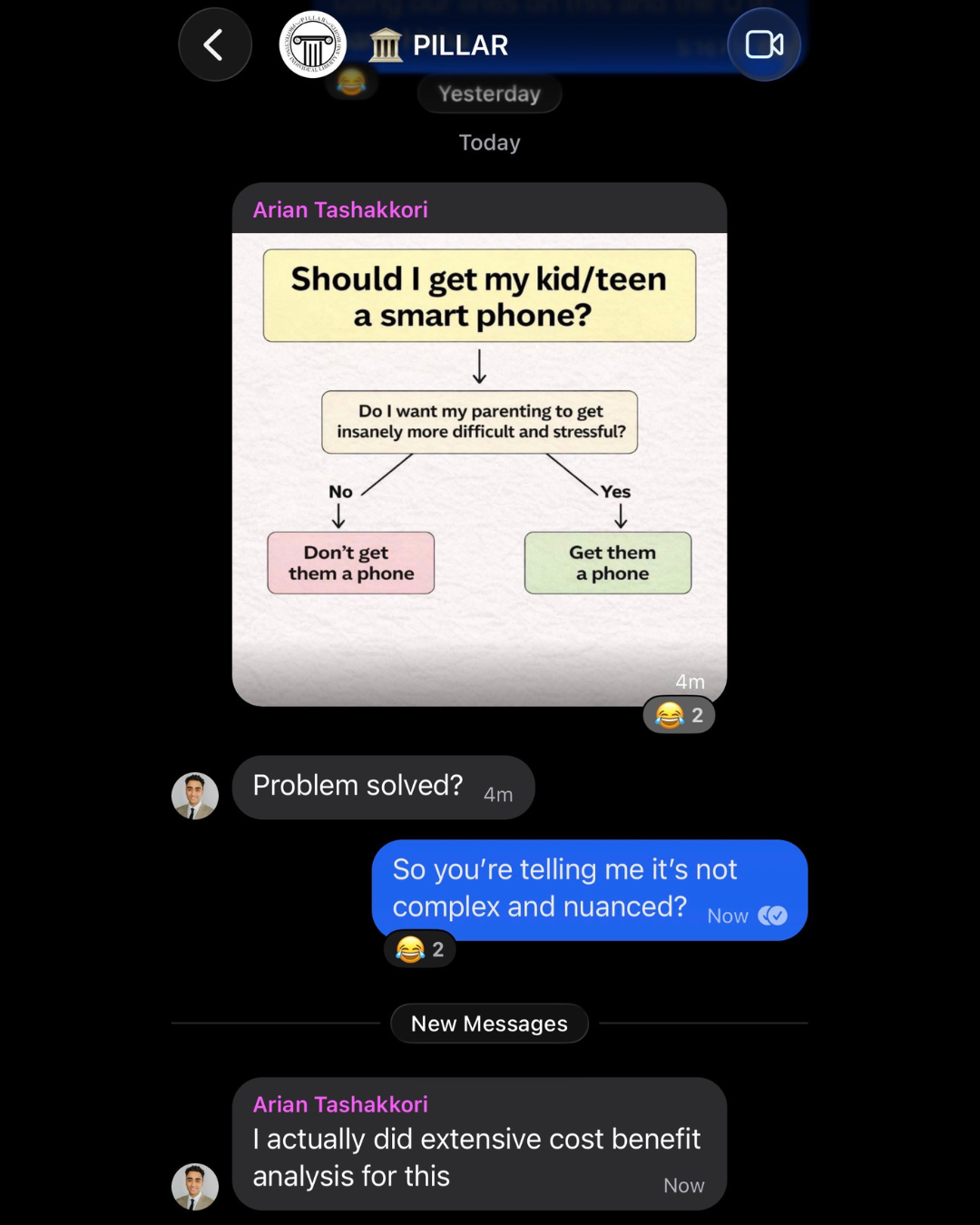
Believe it or not, this is what the Workforce and Education Committee said was too difficult to figure out. It’s not rocket science.
The choice isn’t between safe kids and unsafe kids. It’s between privacy, parental rights, and freedom on one hand, and a state-controlled internet on the other.
But those so-called “truths” don’t hold up as well as they first appear.
What actually counts as harm? Who decides?
How will it be defined in law?
What discretion will an Online Commissioner have?
And the second “truth” only works if you buy into a pretty low view of parents.
That most are disengaged. That they can’t guide their kids. That they need the state to step in and do it for them.
That’s not reality. That’s the sales pitch. So maybe it’s not two truths and a lie. Maybe it’s two assumptions and a lie. Or just three bad ideas.
The recent inquiry into online harms should have answered these questions. It didn’t.
No serious cost benefit analysis. Key expert voices sidelined.
No solid evidence that a ban would actually make kids safer. And yet, the push continues.

Crisis communication, Political scandals, Hipkins allegations, Iran war fallout, Six month pressure window, When does it ease? THE PILLAR PODCAST 020 OUT NOW! Check it out on YouTube or Spotify today!
The frustrating part is this. We already know what works. In fact we made three clear recommendations to the select committee in October last year!
Parents being present and involved.
Equipping young people with digital resilience.
Enforcing laws against genuinely illegal content.
That’s where the focus should be.
This isn’t about dismissing risks online. It’s about pushing back on the idea that more state control is the answer.
Many of you have asked how you can help. Here are three simple ways to get involved.
Share this update or any of our content with friends and family.
Encourage them to sign the petition HERE
Back this work with a donation HERE
We’re building real momentum. And we’re grateful to every one of you who’s part of it.
As you head into the weekend, keep this in mind.
We can stop this. Parents are not the problem. And the state doesn’t need to co-parent your children.
Stay in touch. Stay in tune. See you soon.