Are New Zealanders More Free or Less Free Under National?
When the 54th Parliament ends, one question should matter above all.
Are New Zealanders more free, or less free, than when this government took office?
Every Kiwi should ask that before November 7. National's record raises serious concerns.
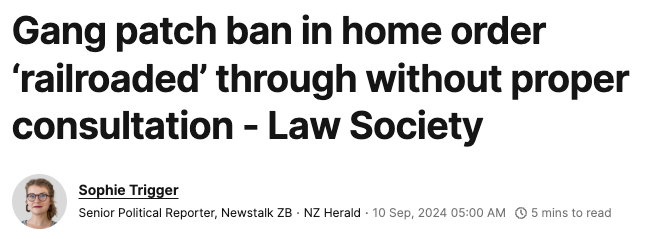
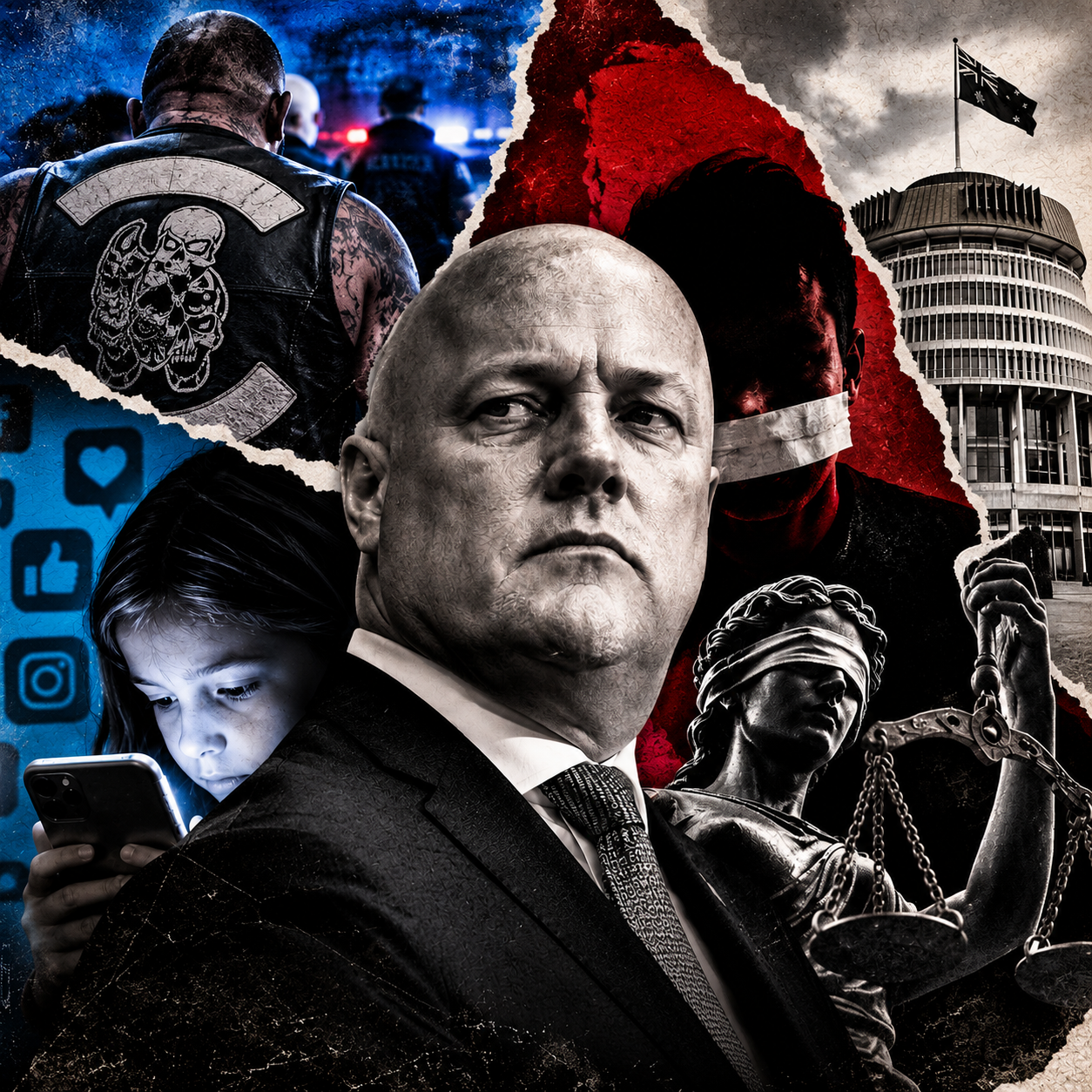
First, the gang patch ban.
National celebrated it as a victory against organised crime. But banning what gang members wear is not the same as dismantling gangs.
Crime may be down, but gang membership is still on the rise. But governments should punish criminal behaviour, not create a fashion police that a successive government could use and abuse against clubs or affiliations of any kind.
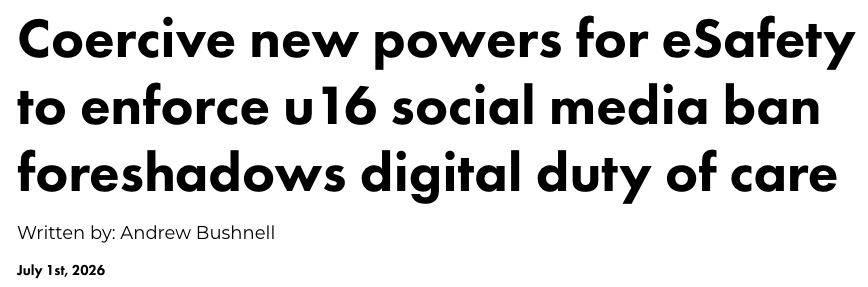
Second, the proposed social media ban for under-16s.
Sold as child protection, the proposal raises serious questions about privacy, age verification and government control over online access.
Protecting children matters. But safety should not become a blank cheque for surveillance and online control.
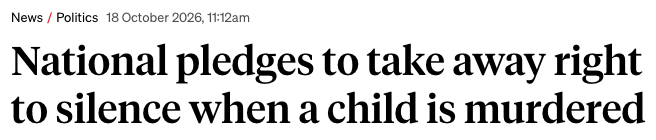
Third, and most recent, is National's proposal to criminalise silence in child murder investigations.
Adults could face up to ten years in prison for withholding information in certain investigations involving murdered children.
As a father of three, I want those responsible for these horrific crimes brought to justice.
But will threatening people with imprisonment for remaining silent deliver justice? Or will it undermine a fundamental safeguard against state coercion?
Silence is not obstruction.
Destroying evidence, intimidating witnesses and interfering with investigations are acts of obstruction. Refusing to speak is fundamentally different.
The right to silence protects individuals from the state's coercive power. It keeps the burden of proof where it belongs.
The English jurist William Blackstone famously argued that it is better for ten guilty people to escape than for one innocent person to suffer.
His principle was not about protecting criminals. It was about restraining government power.
Compelled testimony can produce false accusations, unreliable statements and desperate attempts to shift blame.
And once Parliament establishes an exception to a fundamental protection, future governments may seek to expand it.
Rights that exist only when governments permit them are not rights. They are permissions.
There are better options. Improve investigations. Strengthen forensic capability. Protect vulnerable children. Prosecute genuine obstruction.
If National believes existing laws are inadequate, it must demonstrate where they fail and why less restrictive alternatives will not work.
The burden of proof belongs to the government, not the people whose rights it wants to restrict.
This is not about defending criminals or opposing child protection.
It is about protecting the innocent while pursuing the guilty.
PILLAR's position is simple. Fundamental freedoms must be protected regardless of which political party holds power.
We can protect children without abandoning due process. We can pursue justice without surrendering fundamental rights.
Freedom is not something the government gives us. It is something the government must protect.