Gone in Sixty Seconds
Why Made in China is proving irresistible to car buyers, but could cost our democracy dearly
If you've ever purchased an electric vehicle like I recently did, one of the things you have to get used to is the dramatic accelerating ability. Forget McClaren, Schumacher, and Verstappen. Old Mrs Jones from next door in her boxy-looking EV can now leave even the gruntiest petrol-head in her dust.
What most people don't realise though is that modern EVs possess not only impressive acceleration, but an array of data-collecting capabilities. Tech experts have described modern EVs as “mobile surveillance devices” due to their extensive sensors, connectivity, and data collection. Even more concerning is the ability for automakers to take control of a vehicle through remote access.
Enter Chinese automakers like BYD. Previously scorned and dismissed by innovators like Elon Musk, China is now churning out millions of cars, especially EVs, at highly competitive prices. And when you combine a low purchase price with the promise of low running-costs, market forces kick into gear. With the Middle East oil shock likely to play out for some time to come, the issue has become a no-brainer for many consumers.
But what appears to have been forgotten by the current New Zealand government is that we banned (quite rightly) Chinese company Huawei from establishing a foothold in NZ's critical infrastructure just a few years ago when SPARK sought to integrate Huawei 5G tech into our national telecom network.

How big is the problem?
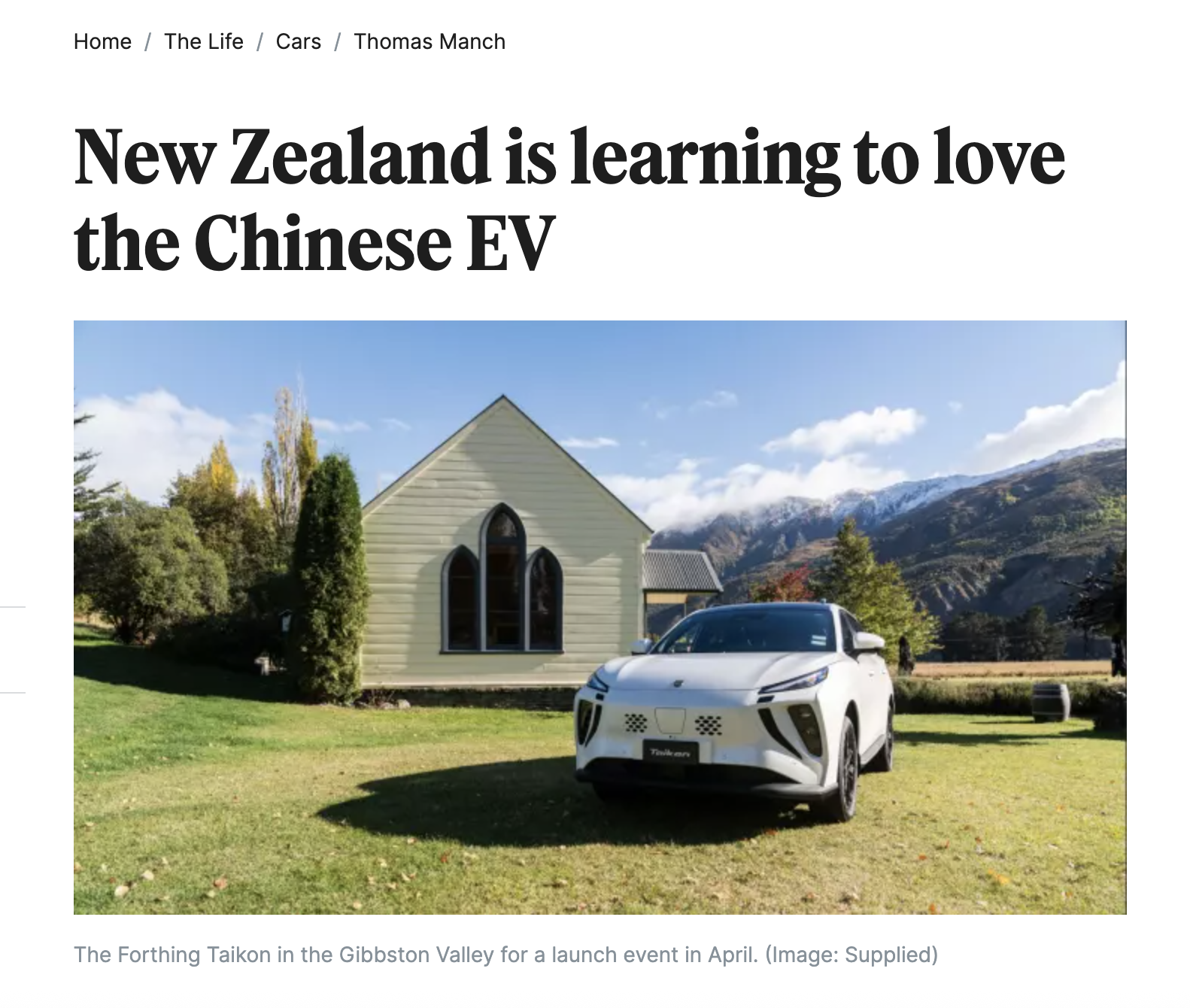
Chinese-made EVs now account for over half of EV imports into New Zealand this year, with market share rising rapidly from 8% of all new cars sold in Q4 of 2025 to nearly 16% in the first quarter of 2026.
What most consumers don't realise is that China's laws, which include the Cybersecurity Law (2017) and Data Security Law (2021), require companies to share data and access with authorities when requested.
Democracies around the world are taking necessary steps to deal with the risk. But down in Wellington? Well, nothing appears to be happening. Yet.
Are we saying then that Chinese EVs are already spying on New Zealanders?
These vehicles collect large amounts of data, like all modern cars. The real issue is who can access that data, under what legal system, and whether that creates risk for New Zealand. So, in short, yes, China's CCP is almost certainly using some of this data.
Are we proposing a ban on Chinese EVs?
We are not necessarily talking about bans. We are simply recommending appropriate safeguards, transparency, and making sure risks are properly assessed.
Why single out China?
According to the NZSIS, China is the number one threat to NZ's national security. It is responsible for the vast majority of cases of foreign interference and transnational repression in our democracy. Trade with China has proven a massive opportunity over the past two decades. But this trade and our growing technological dependence pose an equally large threat.
Won't this tough stance make EVs less affordable?
Affordability matters, but so does protecting national security and personal data. We need to strike the right balance.
This is about being careful, not fearful.
We’ve taken similar precautions before (not only over the Huawei ban but also with our NZSIS scrutinising and modifying the Chinese made ferries ordered for Cook Strait). If phones and ferries mattered then, cars should matter now too.
At PILLAR, we're doing our best to walk the talk. Just in case you're wondering, I chose a Japanese PHEV hybrid instead of Chinese for all the reasons above.
Even as a kid growing up during the final decade of the Cold War when every day it seemed like another communist regime was collapsing, I never imagined the Chinese Communist Party would be factoring into my car purchasing decision more than three decades later. It all sounds a bit crazy, I know. But I've also come to appreciate that in countering foreign interference, democracies and the civil liberties they offer require vigilance in all sorts of ways for their preservation.
It turns out that when dealing with the world's largest authoritarian regime, even electric cars matter. We should hope and pray that one day China becomes a democracy. Until then, however, NZ can't let its political representatives be caught napping behind the wheel.