The Cost of Freedom: Budget 2026
There's an old Bible verse that says, "Where your treasure is, there your heart will be also."
A budget isn't just a collection of numbers. It's a statement of priorities. It reveals what a government values, what it fears, and what it hopes to achieve.
Every dollar spent is a choice. Every funding decision reflects a judgment about what matters most.
A lot has been said about Budget 2026. Some of it positive. Some of it critical. At PILLAR, we're not a tax lobby group, so we'll leave the economic analysis to others. But from a civil liberties perspective, three announcements stand out.
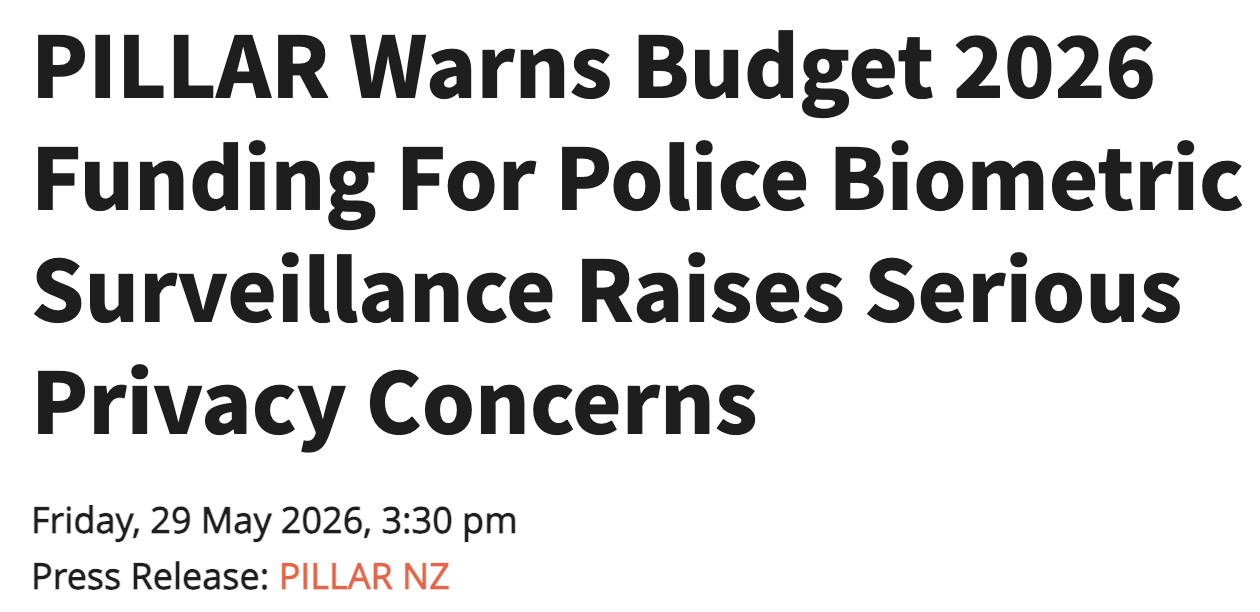
First, $77 million in new police spending, including enhanced surveillance technology and a new biometric identification capability.
Effective policing matters. Public safety matters.
But so do privacy, due process, and freedom from unnecessary state surveillance.
Whenever governments invest in technologies capable of identifying, tracking, and linking citizens to vast amounts of personal information, scrutiny should follow. The question isn't whether police should have effective tools. The question is whether those tools are subject to meaningful limits, independent oversight, and robust safeguards.
History teaches us a simple lesson: powers granted for one purpose are often expanded for another. Once surveillance infrastructure exists, the pressure to broaden its use inevitably follows.
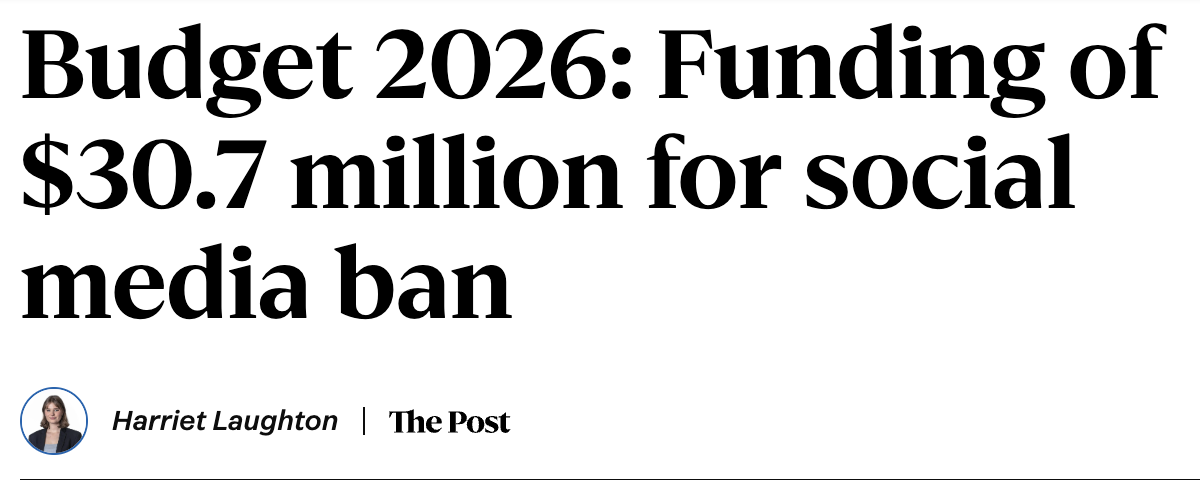
Second, $30.75 million to develop proposals for a social media ban for under-16s.
Protecting children online is a legitimate concern.
But good intentions do not remove the need for careful scrutiny.
How will a ban be enforced? What age verification systems will be required? What information will New Zealanders be asked to hand over in order to prove who they are online?
Too often, governments treat freedom and safety as competing values. In reality, free societies must protect both.
Parents, families, schools, churches, and communities all have a role to play in helping young people navigate the digital world. Before creating new regulatory powers, we should be certain that the cure is not worse than the disease.

Third, increased investment in defence and national security.
Not every liberty issue requires opposition.
Freedom depends on security. A nation unable to defend itself will eventually struggle to defend the rights of its citizens.
PILLAR has long warned about growing foreign interference and influence in New Zealand and across the Pacific. The Pacific remains one of the most strategically contested regions in the world, and recent developments should concern anyone who values democratic self-government.
In a time of economic pressure, it would be easy to neglect long-term security challenges. On this point, the Government deserves credit for recognising that sovereignty and national security remain essential foundations of a free society.
At PILLAR, our concern is not whether power is exercised by the left or the right. Our concern is whether power is being exercised at all, and whether adequate limits exist to restrain it.
Because liberty is rarely lost in a single dramatic moment.
It is lost gradually.
One database.
One new power.
One "temporary" measure.
One compromise at a time.
That is why vigilance matters.
And that is why PILLAR exists.
To ensure that in the pursuit of safety, security, and good intentions, New Zealand never loses sight of the freedoms that make those things worth protecting in the first place.