The system breaks slowly
Forget failed “coup” attempts. Forget hypocritical HDCA cases.
While our media obsesses over another round of political theatre, the NZSIS has once again identified a threat that goes far deeper than the scandal of the week:
Foreign interference from the Chinese Communist Party.
Despite repeated claims from Chinese Ambassador Wang Xiaolong that China has no interest in interfering in our democracy, the NZSIS paints a very different picture:
“The PRC continues to be the most active at conducting foreign interference in New Zealand.”
That is from the New Zealand’s Security Threat Environment 2026 report.

And really, is anyone surprised? Off the top of my head, here are just some of the stories we’ve seen:
Chinese police cars on New Zealand roads.
Secret Chinese police stations operating in our communities.
NZ Police cultural liaison officers accused of feeding information back to CCP-linked organisations.
A parking warden apparently blessed with bottomless pockets for legal battles.
Fake job listings used for intelligence recruitment.
Political donations with strings attached.
Sitting MPs with concerning links to CCP-linked organisations.
Chinese military live-fire exercises near our waters.
Back-door diplomacy with nations in New Zealand’s constitutional realm.
Parliamentary systems hacked.
MPs hacked, with their accounts then used to send phishing links through DMs.
Chinese-language media selectively suppressing pro-democracy stories.
Chinese-made vehicles raising serious questions about surveillance technology and remote control.
And new “ethnic unity” laws that should concern anyone who cares about foreign states exerting influence over diaspora communities.
Most of these stories received a headline or two.
Then they disappeared.

Compare that with the wall-to-wall coverage of National’s supposed “coup”, or O’Brien v Bradbury.
We gorge ourselves on political junk food while something far more consequential is happening underneath our noses.
Our democracy is being tested.
Our security is being probed.
Our sovereignty is being challenged.
At PILLAR, it has sometimes felt like we are yelling into the wind on these issues.
But there is reason for hope.
While much of this work has been buried in government press-release tabs rather than splashed across front pages, New Zealand has been quietly strengthening the relationships that matter:
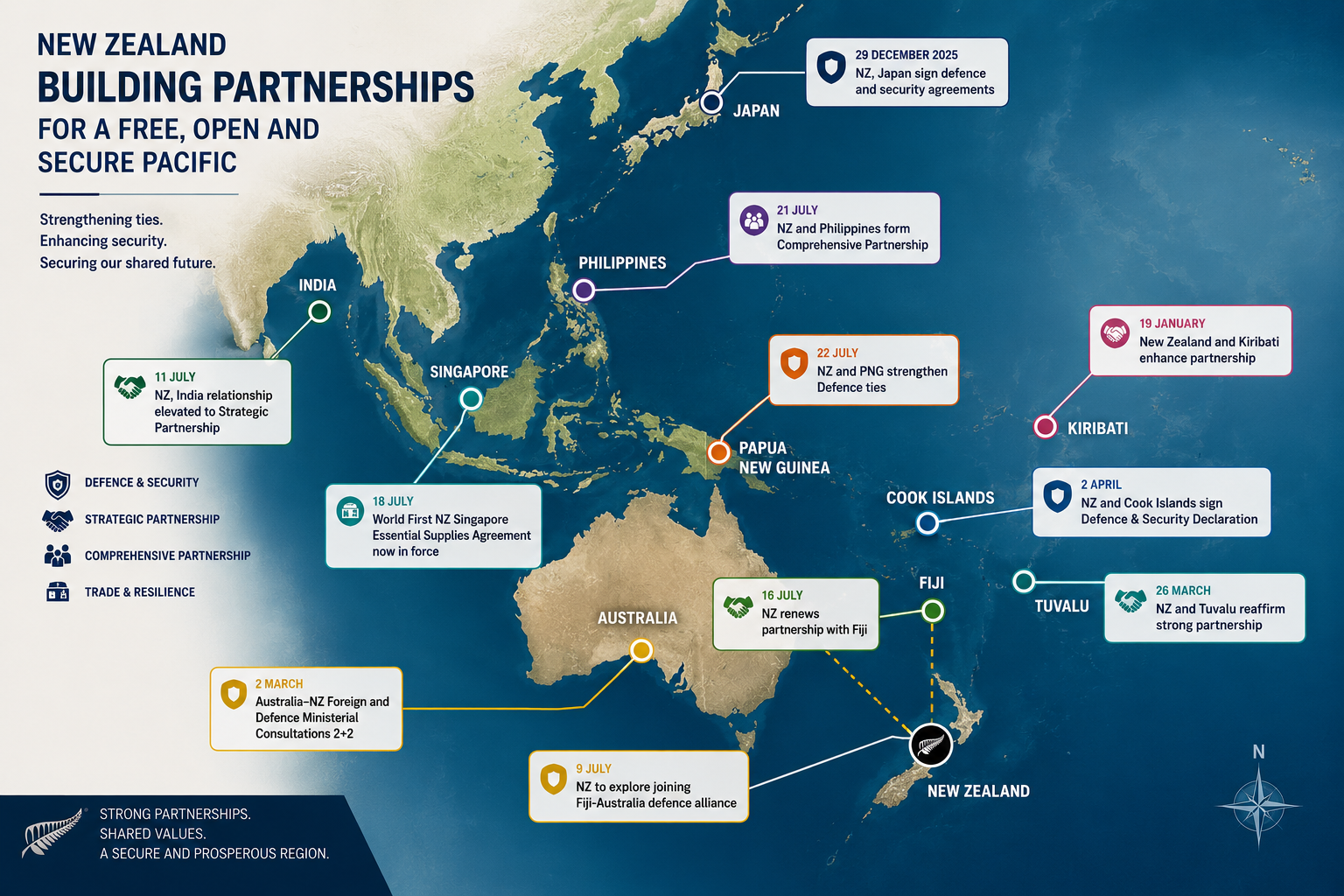
This is what building resilience looks like.
Domestically, there is another important piece of the puzzle: PILLAR’s Foreign Influence Transparency Bill.
If adopted, the FIT Bill would establish a world-leading transparency regime requiring those acting on behalf of foreign powers to declare it openly.
Foreign interference rarely arrives with tanks on the streets.
It is subtle. It is patient. It exploits relationships, institutions, technology, money and information.
It works precisely because each individual incident can be dismissed as small, technical or uninteresting.
The system breaks slowly.
One day, a country can wake up and realise that decisions once made freely are being shaped elsewhere, institutions once trusted have been compromised, and sovereignty has been surrendered without a single shot being fired. By then, it is too late.
PILLAR exists to make sure that day never comes.
But this job is much bigger than Nick, Arian and me. It requires a community of New Zealanders who refuse to look away. Every time you read one of these stories, share our work, challenge complacency, talk to your friends, support our campaigns or donate to keep us going, you help shine light into the places foreign interference depends on remaining dark.
We are absolutely in this fight for you.
And we could not fight it without you.