Here We Go Again: “Hate Speech” Laws
One month into Australia’s under-16 social media ban, the government is already popping the champagne and calling it a world-leading success. Based on what? Feedback from parents and kids, and the deletion of 4.7 million accounts.
That might earn them a self-congratulatory headline. But it’s not evidence of real impact.
We’re still waiting for the hard data that actually matters:
How many under-16 users are still accessing these platforms. deleted accounts don’t equal removed users, especially when people have multiple accounts or can still view content while logged out.
How many adults were wrongly swept up and locked out.
Whether anything has actually improved: mental health outcomes, exposure to “harmful” material, or real-world safety indicators.
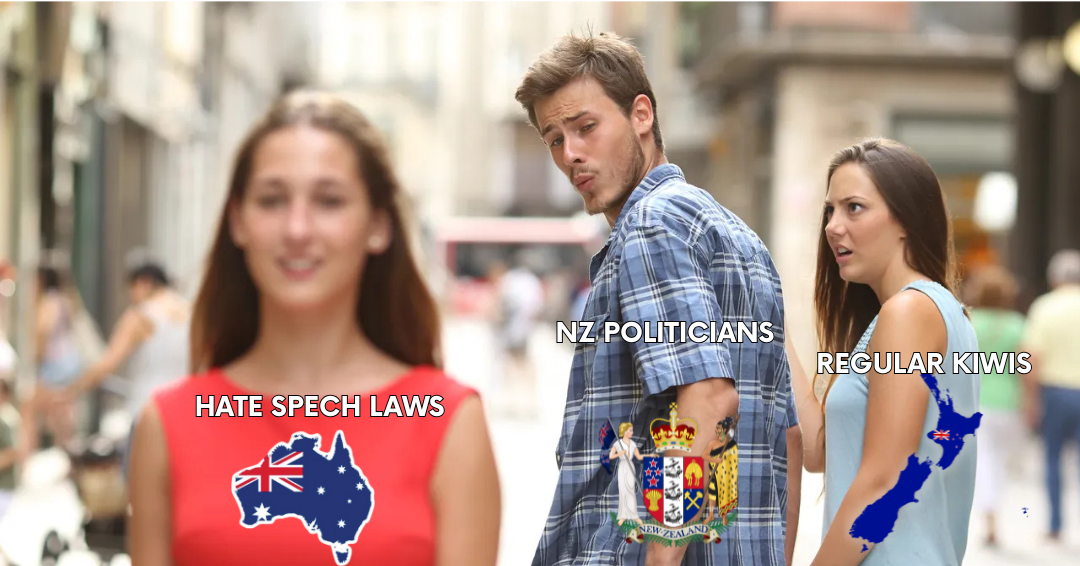
And despite the missing evidence, the UK, the EU, and New Zealand are already eyeing the same playbook. Worse, it won’t stop at social media.
Off the back of Australia’s new wave of “hate” legislation, “hate speech” and “hate crime” campaigners on this side of the ditch are regrouping. Their goal is simple: criminalise words, opinions, and ideas they don’t like.
Now you might think, surely there’s nothing to worry about. After all, since 2021 governments have paused or scrapped similar proposals here. Wrong.
2026 isn’t the year to sit back and let other people’s “good intentions” decide how free you’re allowed to be.
Kiwis have already been clear: we don’t want “hate speech” laws. We don’t want politicians deciding which ideas are allowed. We don’t want police logging and pursuing non-crime “hate incidents.” And yet the same proposals keep coming back, repackaged and rebranded, because they’re politically convenient.
And this isn’t a left vs right thing. Both sides are susceptible. “Protect the vulnerable” is an easy slogan, a cheap virtue signal, and a reliable vote-harvester.
Behind the claim that this is “complex and nuanced” is a simple truth.
“hate speech” laws don’t work.
They’ve never worked. And history shows something even more important: minorities and vulnerable people are safer in a society that protects “hate speech” than in a society that claims to protect them from “hate speech”. Because when you’ve got no political capital and no seat at the table, what you still have is your voice. And that can make all the difference in defending, fighting for, and advancing your rights.
So let’s answer the question that dozens of six-figure consultants, public servants, and government officials seem incapable of answering:
What’s the solution to “hate speech” and “hate crimes”?
More speech. Counter-speech. Debate. Exposure. Let the marketplace of ideas and democracy live, breathe, and thrive, instead of outsourcing disagreement to state coercion.
Words like “hate” and “harm” are entirely subjective. Build law on those vague foundations and you get inconsistent enforcement, confusion for frontline officers and the judiciary, and a framework that can be used to silence anyone with unpopular views.
So what do we do?
We say no. Loudly, early, and together. Because when freedom-loving Kiwis unite against this kind of legislation, we can beat it.
Don’t let someone else’s “good intentions” restrict your freedoms.